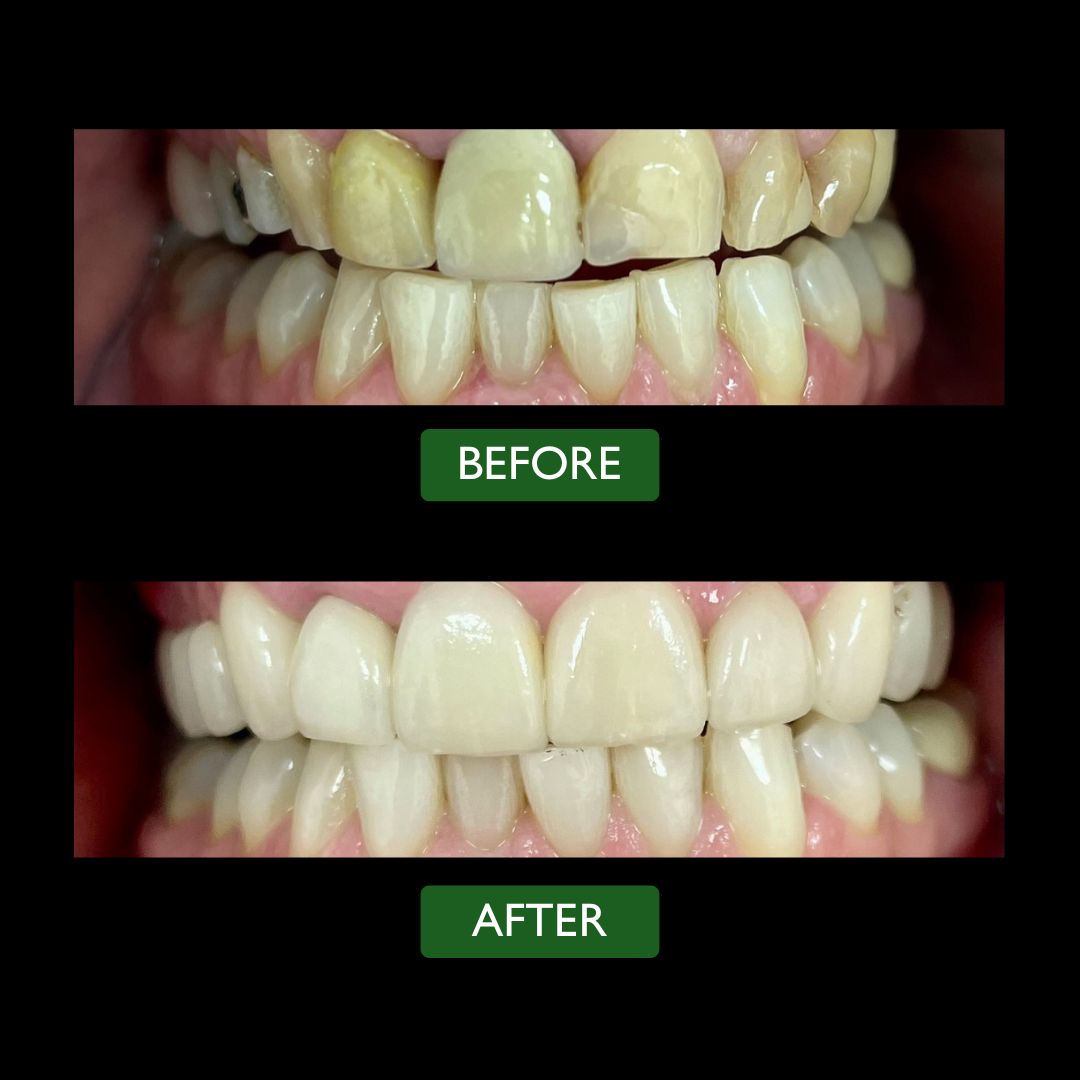
Thinking about replacing missing teeth before the festive season? You are not alone. Whether you want to enjoy Christmas meals without worry or smile confidently in photos, choosing between implants and dentures can feel daunting. This guide explains each option in plain English so you can decide what fits your goals, timeline, and budget, with insight into how we plan treatment digitally and keep even the most nervous patients comfortable.
Your main options at a glance
Single dental implant: A titanium post placed in the jaw to replace one missing tooth, followed by a custom crown that looks and functions like a natural tooth.
Implant bridge: Two or more implants supporting a bridge of several teeth. Helpful if you are missing a span of teeth without needing an implant for every gap.
Implant-retained overdenture: A removable denture that clips onto 2 to 4 implants for better stability than a traditional denture, especially useful for the lower jaw.
Conventional denture: A removable acrylic or chrome appliance that replaces several or all teeth. Lower cost initially, but can loosen over time as the bone changes.
Who is each option best for?
Single implant: Ideal when one tooth is missing and the surrounding teeth are healthy. You avoid drilling neighbouring teeth as with some bridges.
Implant bridge: Good when several teeth are missing in a row and you want a fixed solution with strong chewing comfort.
Implant-retained overdenture: A smart middle ground for full-arch replacement if you want improved stability and value compared with fully fixed bridges.
Conventional denture: Often chosen when you want the lowest upfront cost, prefer a removable option, or are not suitable for implants.
Comfort and chewing efficiency
Implants and implant bridges: Feel closest to natural teeth and offer the most chewing strength. Many people forget they are there once healed.
Implant-retained overdentures: A big step up in stability compared with traditional dentures. Less movement, more confidence with speech and eating.
Conventional dentures: Modern dentures can look very natural, yet they rely on suction and fit. Upper dentures are often stable, while lower dentures may move more. Adhesives can help.
Pain, healing time, and surgery length
How painful are dental implants? During placement you are fully numb with local anaesthetic, and sedation can be discussed if you feel anxious. Most people report mild to moderate soreness for 2 to 3 days, manageable with standard pain relief. Some swelling or bruising can last up to a week.
How long does dental implant surgery take? A single implant is often placed in about 45 to 90 minutes depending on complexity. Multiple implants or full-arch work takes longer. We will talk you through timings at your consultation.
How long do dental implants take from start to finish? A common pathway is 3 to 6 months from assessment to final teeth. This varies with healing, whether grafting is needed, and the type of restoration. In suitable cases immediate provisional teeth can be fitted on the day, particularly for full-arch bridges; this is case dependent and discussed during planning.
Do you have no teeth while waiting for implants?
No. We plan so you can wear temporary teeth during healing. Options include:
A temporary denture or partial denture
A temporary bonded bridge in selected cases
Immediate provisional fixed bridges for full-arch treatment when clinically suitable You will have clear instructions on what to eat, how to clean, and when to return for checks.
Longevity and maintenance
How long will full mouth implants last? With excellent daily care and regular professional maintenance, implants can last many years. The supporting bridge or overdenture may need maintenance or component replacement over time. Gum health around implants is crucial, so hygiene visits are essential.
Dentures: Expect relines or remakes over the years due to natural bone changes. Clean daily, soak as advised, and store safely out of the mouth overnight unless told otherwise.
Pros and cons
Implants and implant bridges
Pros: Fixed, strong chewing, protect neighbouring teeth, very natural look and feel
Cons: Higher upfront cost, small surgical risks, need excellent cleaning habits
Implant-retained overdentures
- Pros: Better stability than conventional dentures, fewer implants than fixed bridges, easier cleaning of the denture
- Cons: Removable, clips and components need periodic servicing, still some movement
Conventional dentures
Pros: Lowest initial cost, no surgery, quick to deliver
Cons: Less stability, especially in the lower jaw; regular adjustments likely; chewing is less efficient
UK cost ranges, in plain terms
Exact fees vary by case. Typical guidance:
Single implant with crown: often several thousand pounds depending on scans, materials, and any grafting
Implant bridges: higher than single implants because of multiple units
Full-arch fixed bridges: commonly per arch from around £10,000 to £16,000, with full mouth usually from about £20,000 upwards depending on complexity
Implant-retained overdentures: generally lower than fixed full-arch bridges
Conventional dentures: the lowest upfront cost, with future relines or remakes expected You will receive a written plan and itemised quote after assessment.
Who should avoid dental implants?
Implants are not suitable for everyone. You may be advised to delay or avoid implants if you:
Have uncontrolled gum disease
Are a heavy smoker and unwilling to reduce or stop
Have certain medical conditions or are on medications that affect healing or bone
Cannot commit to daily cleaning and regular reviews
Many health factors can be managed to improve suitability. A full assessment including 3D scans helps us advise you clearly.
What is the cheapest form of tooth replacement?
A conventional denture is typically the most affordable initial option. If you want more stability without the full cost of fixed bridges, implant-retained overdentures are a value-focused compromise.
Our digital planning, gentle anaesthesia, and aftercare
At East Grinstead Dental Practice your comfort and clarity come first. We use 3D imaging, intraoral scanning, and precise software planning to map implant positions before we begin. On the day, we use gentle local anaesthesia so you stay comfortable, with the option to pause treatment and discuss sedation if you are especially nervous. After surgery, we review you closely, give clear home-care instructions, and are on hand to answer questions.
Patients tell us they value our calm explanations, kind team, and modern, clean environment. If gagging, anxiety, or a past bad experience has put you off, we will take things at your pace and check in throughout.
If you are researching treatment options right now, our service pages explain how we plan and deliver care. Learn more about dental implants east grinstead to see how digital planning supports precise, comfortable treatment.
Which is better, dentures or implants?
There is no single right answer. If you want the most natural feel and chewing strength, implants or implant bridges usually win. If you are price conscious, prefer a removable option, or have health reasons to avoid surgery, dentures are a practical choice. Many people choose implant-retained overdentures for a stable result at a lower cost than fixed bridges. The best option is the one that fits your health, budget, and lifestyle.
Getting party-season ready
If you want to eat and smile confidently over Christmas, now is the time to explore your options. Even if your final teeth will take a few months, we can plan temporary solutions so you never feel without teeth during the journey.
Summary and next steps
Implants and fixed bridges offer the best stability and chewing comfort, with longer timelines and higher upfront costs.
Implant-retained overdentures improve denture stability without the full cost of fixed bridges.
Conventional dentures are the most economical first step, with ongoing adjustments expected.
Healing is usually straightforward with mild soreness for a few days. Temporary teeth are available while you wait.
Suitability depends on gum health, bone levels, medical factors, and your commitment to cleaning.
Ready to find out what would work best for you? Book an implant suitability check with our friendly team. If you are comparing options to replace missing tooth in east grinstead, we will guide you through costs, comfort, and timelines so you can look forward to confident eating and smiling.